Carnival Production 2026 Synopsis
A terra é abençoada
The land is blessed
Preciso investir, conhecer
I need to invest, to learn
Progredir, partilhar, proteger
To progress, to share, to protect…
…De noite, vai ter cantoria
At night, there will be singing
E está chegando o povo do samba
And the samba crowd is arriving
É a vila, chão da poesia, celeiro de bamba
It’s the village, the ground of poetry, cradle of the samba
GRES Imperatriz Leopoldinense 2010.
Our 2026 Production is inspired by G.R.E.S Unidos de Vila Isabel’s 2013 song A Vila Canta o Brasil, Celeiro do Mundo, Agua no Feijão que Chegou Mais Um – Vila Sings of Brazil, Breadbasket of the World, Water in the Beans, Another One Has Arrived’
This samba celebrates the simple, generous heart of rural Brazil — a community that rises with the sun, gives thanks for each new day, and works the land with care, faith, and dignity. It honours the rhythm of daily life: coffee at dawn, seeds sown in hope, sweat on the soil, and the deep satisfaction of feeding others from the harvest. The land is treated as blessed, something to cultivate, protect, and pass on.
At its core is the spirit of “água no feijão” — the belief that even when there is little, there is always enough to share. A stool is pulled up, water is added to the beans, cornmeal cake is baked, and everyone is welcomed. Labour turns to celebration as evening falls, lanterns are lit, and the community gathers for singing, samba, and Festa Junina festivities. The fields become the village square, and hard work blossoms into joy.
Festa Junina is the Harvest Festival celebrated in Brazil associated with the 3 Saint’s days in June – Anthony of Padua, John the Baptist and Peter)
It is a portrait of hospitality, gratitude, and collective abundance — where caring for the land and caring for one another are one and the same, and where from humble soil grows poetry, music, and shared celebration.
In our re-interpretation, we extend this idea to focus on the SEEDS of SAMBA that we sow in the young people we work with. The concept that ‘We Reap What We Sow’ (Colhemos Que Plantamos) and that the themes described for the land apply to people too. The work, positivity and energy we put into learning music and dance is returned to us and our audiences in self-fulfilling process.

Sowing the Seeds
Drummers
Semeando os Sementes
Bateria

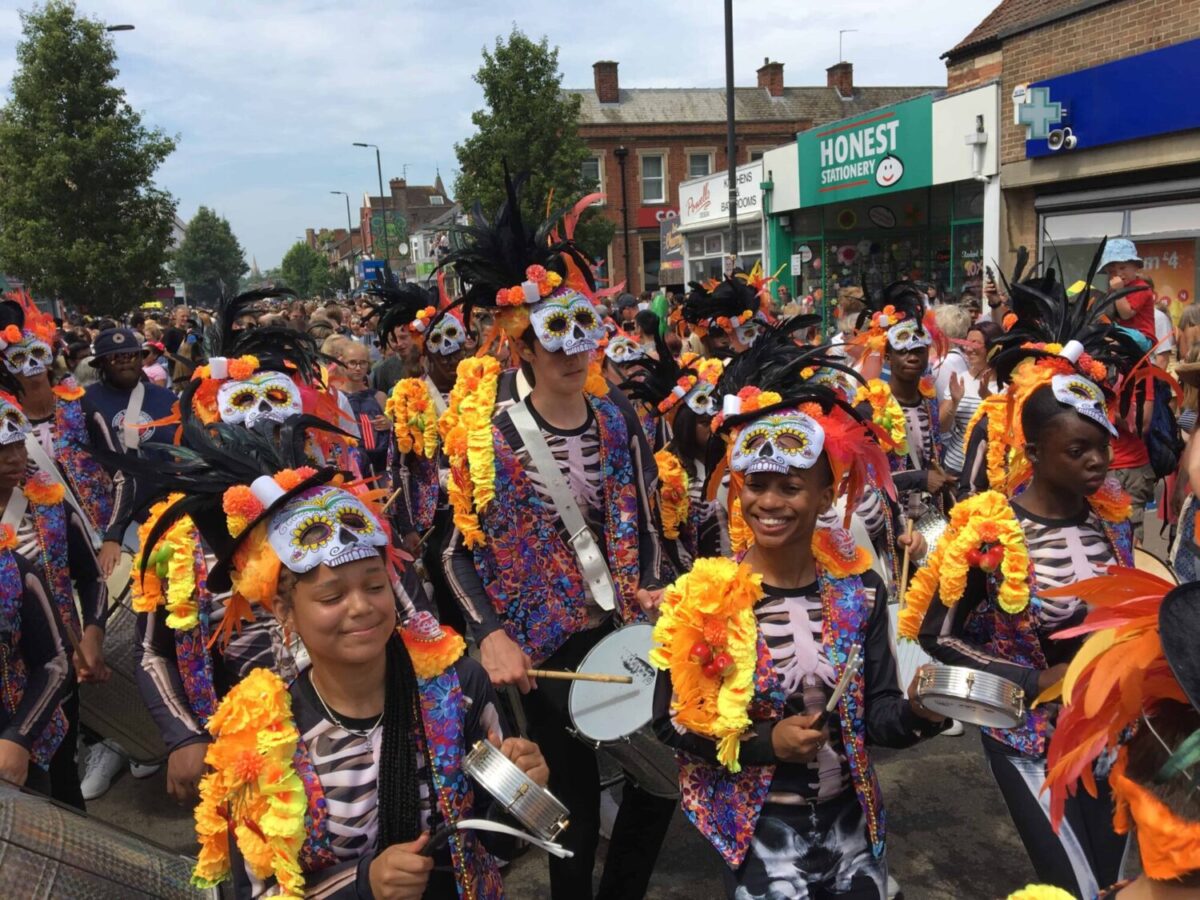
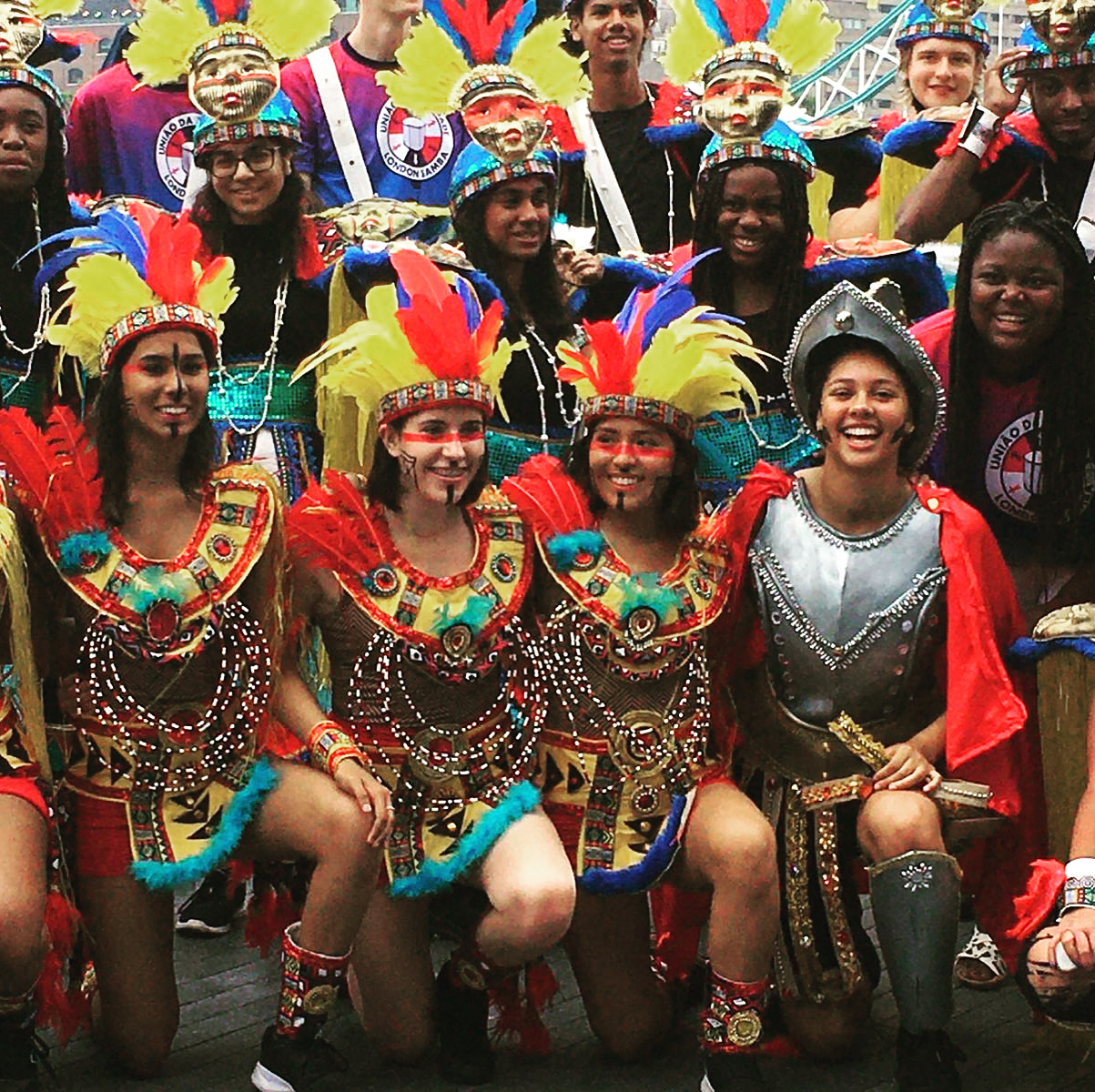
Our bateria (drummers) will represent farmers — cultivators of character, discipline and community through samba. Just as those who work the land must show patience, resilience and responsibility, our young musicians learn that growth comes through commitment and care. Through rehearsals, teamwork and shared purpose, they embody the values of the countryside: humility, perseverance and mutual support. In nurturing rhythm together, they cultivate confidence, belonging and pride — proving that, as in the fields, we reap what we sow.
Their costumes will offer a carnival interpretation of traditional rural attire seen in communities across the Brazilian interior, including the iconic chapéu caipira, long associated with farmers and countryside life. This visual language connects the bateria to the spirit of the roça — the warmth, simplicity and strong communal bonds of rural Brazil — reinforcing our message that cultural heritage and positive values must be carefully planted, tended and passed on to the next generation.
Bateria research examples....


In Gratitude
Flag Couple
Em Agradecimento
Porta Bandeira
Mestre Sala

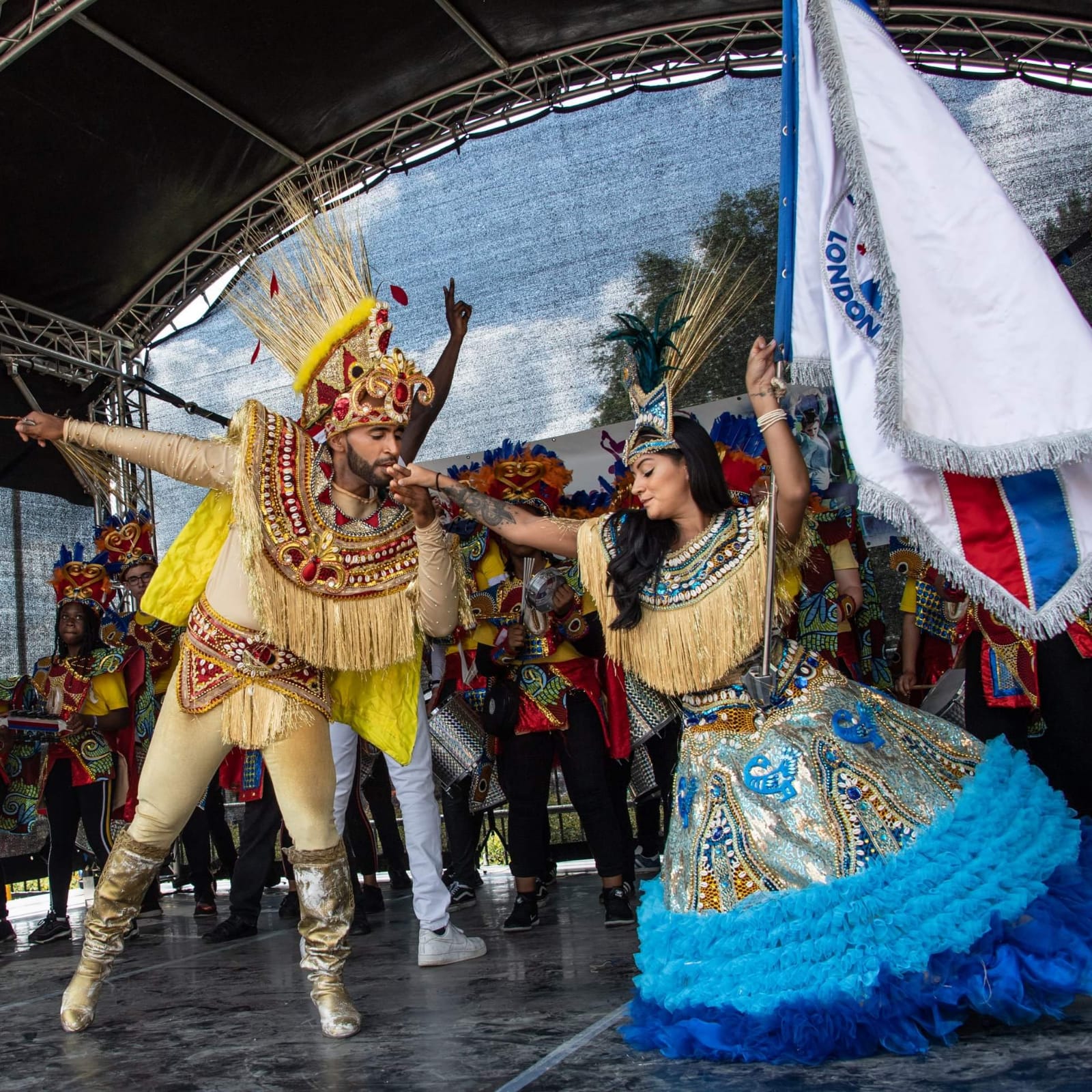
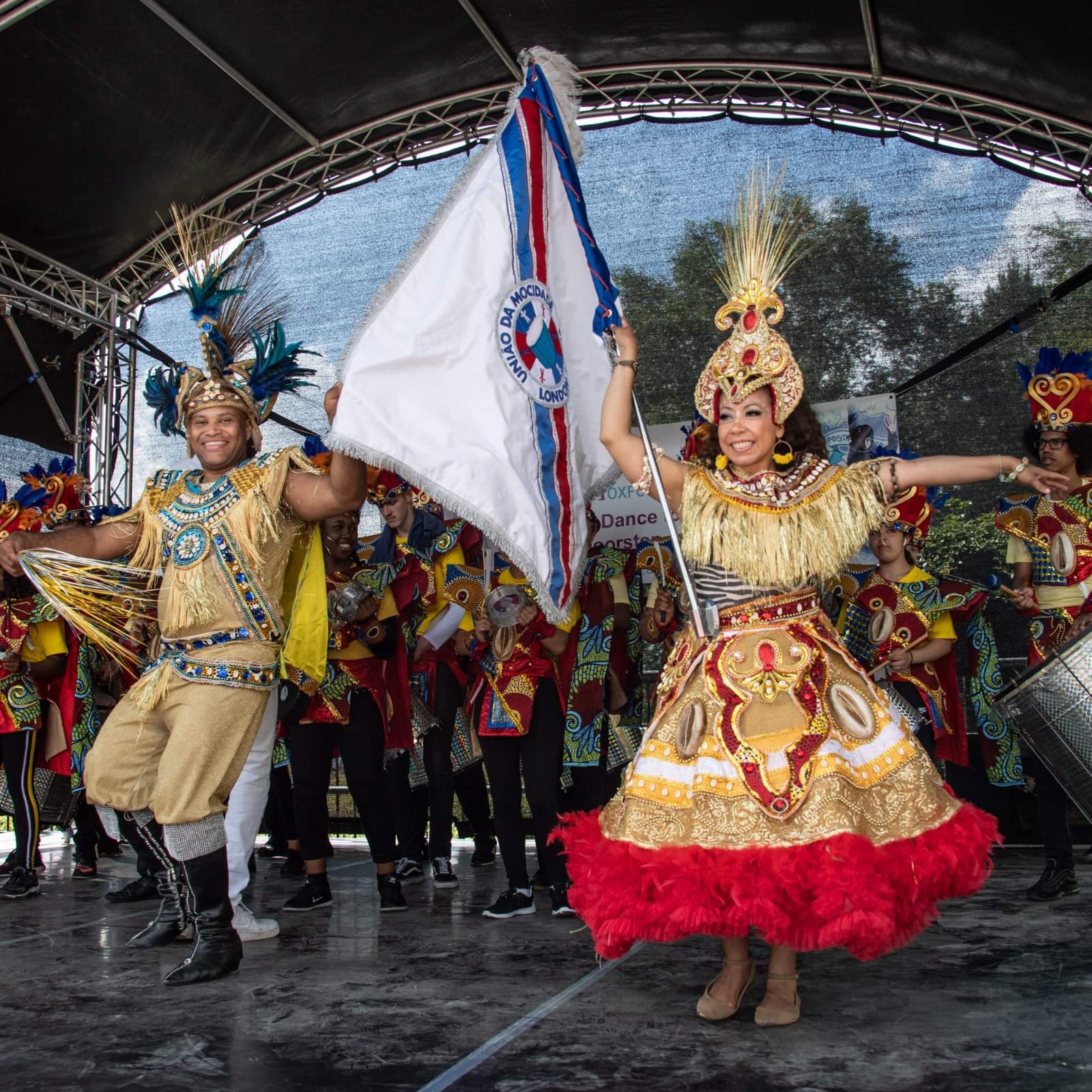
The 2 special feature costumes worn by our flag bearing couple (Porta Bandeira and Mestre Sala) will represent the gratitude at the heart of Festa Junina. Inspired by the traditional bonfire of São João (St John the Baptist), the village church, and the star-filled June sky, the design reflects the warmth, faith and celebration that follow the harvest. The fire symbolizes purification, renewal and good fortune for the season ahead, while the church and stained glass of the June saints evoke devotion, protection and community. Beneath the night sky, these elements come together not only as a celebration of the land’s abundance, but as a metaphor for human growth — a reminder that, just as in the fields, we reap what we sow. Through gratitude for the harvest, we honour the lessons, resilience and shared spirit that sustain both the earth and one another.
Porta Bandeira/Mestre Sala research examples....


Harvest Festival
Dancers
Festa Junina
Passistas
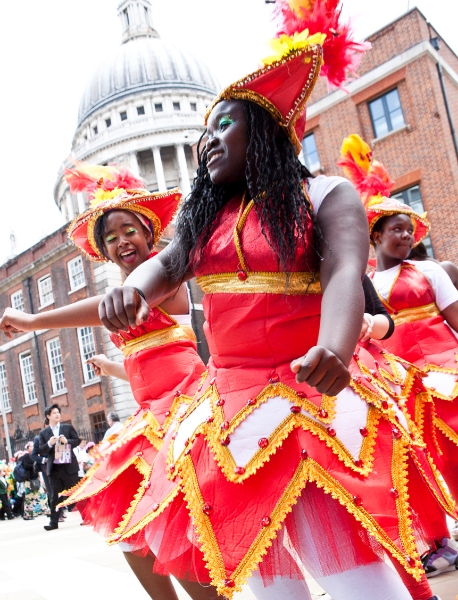
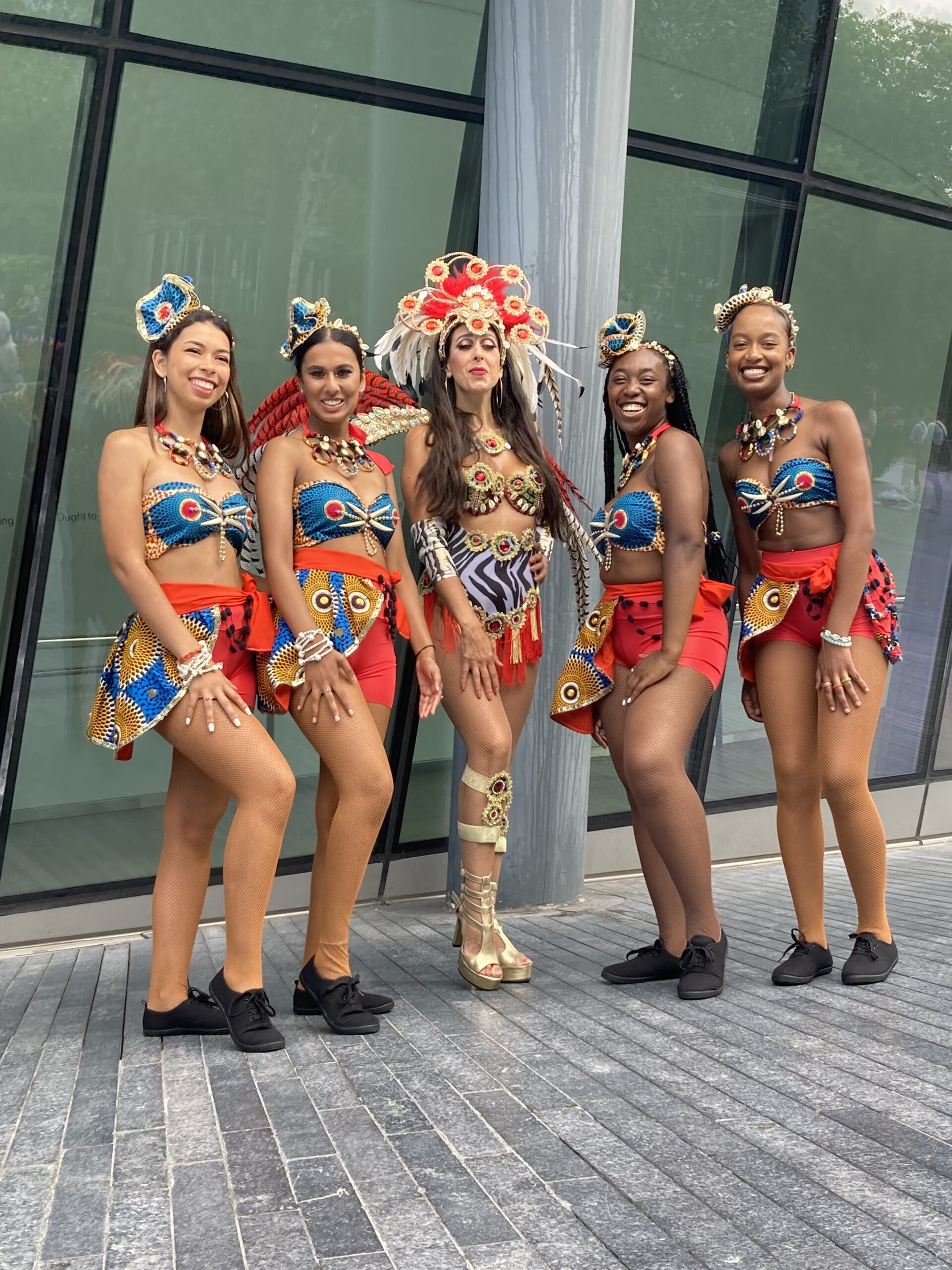
Our passistas represent the celebratory heart of Festa Junina — the joyful moment when the harvest is gathered and the community comes together to dance. Dressed in vibrant, multi-layered skirts and flower print fabrics, their costumes draw from traditional rural women’s attire, evoking the warmth, colour and exuberance of the village arraiá (square). The decorative archways featured in their backpieces reference the festive structures used in dance games and celebrations, framing this section as a space of shared joy and cultural pride, of course all with more carnivalesque interpretation.
Symbolically, this is where we truly reap what we sow: the culmination of months of rehearsal, discipline and dedication. Through confident movement and collective energy, our young dancers embody the reward of hard work — a celebration not only of the harvest of the land, but of personal growth, teamwork and creative achievement.
Passista research examples....


Costume Making


Working with a team of young volunteers lead by AD Tamara Arom-Hobbs, we will create the bateria costumes using the ‘chapeu caipira‘ as a base, and adding our own character with repurposed feathers and other re-useable materials, as well as adding a more stable base so there is no risk of hats flying off during vigorous drumming!
We will also create accessories, using traditional Rio carnival materials combined with 3d printed materials made in-house. The young voluteers will also have the opportunity to paint the ‘seeds of samba’ with tutelage from UDM’s artistic director.
An example of spot welding for Rio Canival
Passista costumes will involve many hours of ruffle sewing, and young volunteers will have the opportunity to learn to use the sewing machine and overlocker, perhaps for the first time. Headdress frames will be made in house by Tamara using UDM’s previously funded spot welder and the volunteers will work together to decorate the frames as per the designs.
As well as working with the volunteers, Tamara will focus a proportion of her time on the feature costumes for the flag bearing couple (Mestre Sala and Porta Bandeira) which will require a high level of skill and detail. She will experiment with transparent thermoplastics to create a ‘stained glass’ effect on the church elements of the costumes, and depict the ‘Southern Cross’ constellation which adorns the skies of Brazil, creating a contrast with the night sky and the fire effect on the lower parts of the costumes. Again the headress will be made from scratch using traditional spot welding techniques for a bespoke structure.
Materials will be repurposed wherever possible to minimise environmental impact.
Drumming and Dance


Our young drummers will train intensively with our MD Iian Pattinson and his team of drumming directors to master the challenging music of REAL Rio-style Samba. The music is not simplified in any way, they learn to play authentically to equip them to take part in any group in the UK or Worldwide as the next generation of samba drummers. Many of our players have gone on to do this.
They gain valuable skills in rhythm, technique and performance as well as an understanding of the language and non-verbal communication elements of the genre. Through learning and performing samba, they develop transferable skills like concentration, discipline, teamwork, and leadership, while boosting self-confidence, self-awareness, and self-esteem. Participants also have the opportunity to connect with peers across London, celebrate cultural diversity, build community, and enjoy a fun, stress-relieving experience.
Our Mestre Sala (Master of Ceremonies) and Porta Bandeira (Flag bearer) are the most important and traditional part of the Samba School as they carry the ‘colours’ of the school. This position must be treated with the utmost respect and therefore we use a professional dance couple to represent this in the most culturally appropriate way in our role of educating the public in the authentic art of samba. You can learn more about these roles in a video we created with our Porta Bandeira and Cultural Advisor Gladys Cavalcante and her dance partner Chirag Goyate.
This year’s passistas (dance section) will be invited from an independent project run by our dance teacher Michela di Felice. They train weekly with her in various London classes and will be invited to partner with us to wear the costumes representing this year’s theme.